


Views: 0 Author: Site Editor Publish Time: 2026-06-15 Origin: Site


Deploying consumer-grade devices in harsh environments carries a massive hidden penalty. Extreme conditions quickly expose the weaknesses of standard hardware. This leads to high failure rates. Severe IT support bottlenecks naturally follow. Worst of all, you face critical operational downtime. Field operations demand much more. Crews in utilities, construction, logistics, and emergency services rely heavily on their mobile tech. They need devices to function reliably as edge data collection tools. They also require an uninterrupted communication hub in remote areas. Selecting the right rugged tablet requires looking far beyond basic durability specifications. You must carefully evaluate ecosystem integration and enterprise deployment capabilities. We will explore why off-the-shelf devices fail in the field. You will learn how to assess environmental standards. Finally, you will discover how to secure your operational continuity for the long term.
Consumer tablets in protective cases do not match the internal thermal management, interface durability, or lifecycle longevity of purpose-built rugged devices.
Evaluation must prioritize independently verified standards (MIL-STD-810H, IP65/IP67) over generalized marketing claims.
A true outdoor work tablet integrates seamlessly with Enterprise Mobile Device Management (MDM) platforms to ensure security and scalable deployment.
You often see companies buy cheap consumer tablets. They hope to save money on initial hardware costs. This strategy rarely works outdoors. It completely ignores the hourly cost of idle field crews. When a fragile tablet breaks, work stops immediately. A highly paid repair crew sits idle. They wait for a hardware replacement. The upfront savings vanish in mere hours. A single broken screen costs more in lost labor than the device itself. You cannot afford these disruptions. Enterprise mobility requires dependable tools. Teams must stay active throughout their entire shift.
Hardware failures do not just stop work. They threaten your core data. Imagine a device failing mid-task. Localized data loss happens instantly. Field workers lose hours of critical input. Furthermore, standard consumer antennas struggle in remote areas. Poor reception creates a severe operational drag. Field applications cannot sync. Dispatchers lose track of remote crews. You need robust internal cellular modems. Dedicated pass-through antennas maintain connections where consumer devices drop off. Strong connectivity ensures real-time data integrity across your entire operation.
Many organizations attempt a shortcut. They wrap a commercial tablet in a tough aftermarket case. This approach fails to address critical vulnerabilities. Bulky cases do not magically seal exposed charging ports. Dust and moisture easily bypass these physical barriers. Inside the device, delicate internal components continue to vibrate. Repeated shocks easily detach internal ribbons. Thermal throttling presents another massive issue. Heavy cases trap heat inside the unit. Standard batteries overheat in extreme summer weather. The processor slows down drastically to prevent a fire. The tablet ultimately freezes or shuts down entirely.
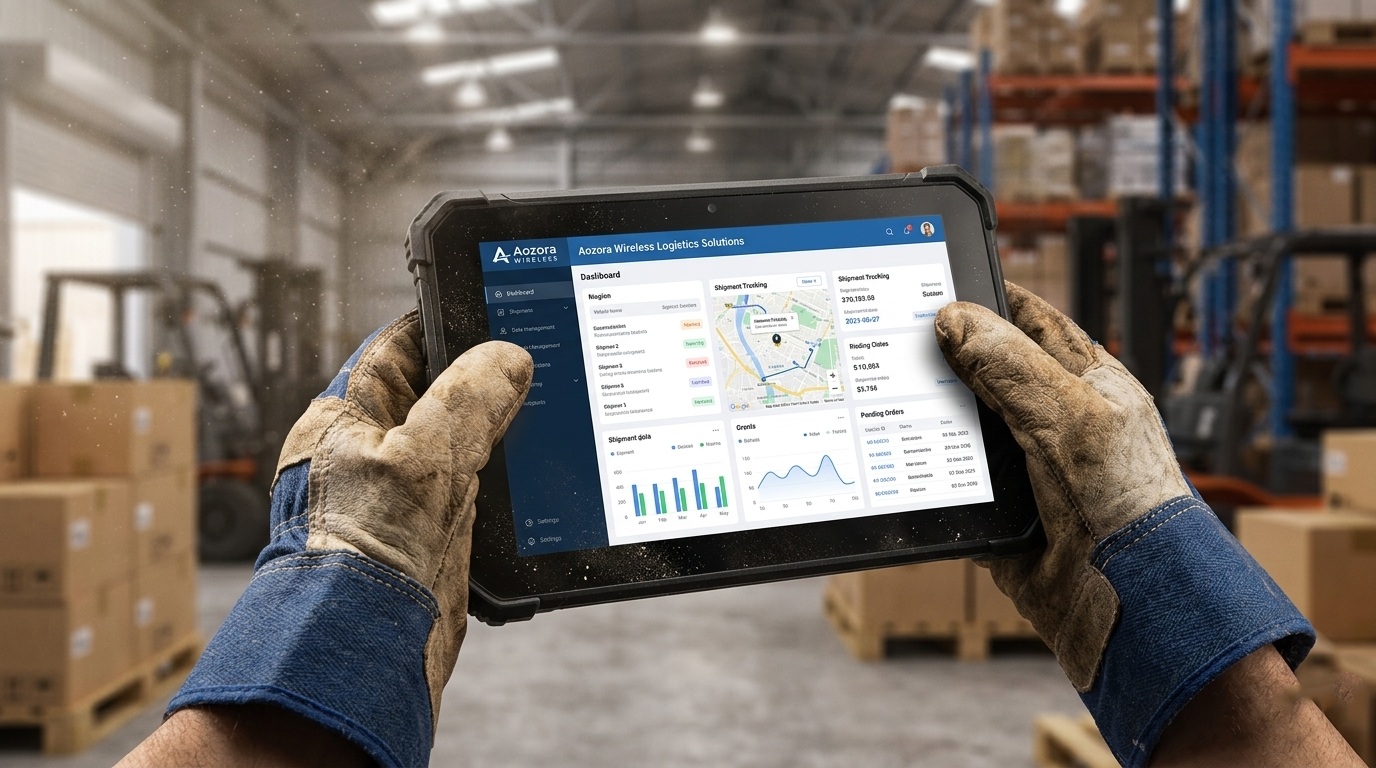
You must understand the exact operational difference between IP65 and IP67 ratings. These numbers dictate environmental survival. IP65 denotes a water-resistant device. It easily handles low-pressure water jets and heavy dust. Most standard construction sites do well here. However, IP67 denotes a fully sealed unit. It survives temporary submersion in water. You strictly require a waterproof rugged tablet for extreme scenarios. Maritime operations demand this level of protection. Crews facing heavy rain exposure need IP67. Industrial food processing involves intense chemical washdowns. Only a fully sealed device survives these daily routines.
| IP Rating | Dust Protection | Water Protection | Ideal Field Application |
|---|---|---|---|
| IP65 | Fully dust-tight | Low-pressure water jets | Warehousing, basic construction, logistics |
| IP67 | Fully dust-tight | Temporary water submersion | Maritime, heavy rain, chemical washdowns |
Marketing claims mean nothing without independent verification. You should demand MIL-STD-810H testing methodologies. This military standard rigorously tests equipment against severe impacts. A true drop resistant tablet requires specialized engineering. It features internal chassis isolation. This prevents shockwaves from destroying the motherboard. Reinforced corners absorb the kinetic energy of a harsh fall. Gorilla Glass protects the display from shattering. These devices easily survive repeated 4- to 6-foot drops directly onto concrete. They bounce, power through the impact, and keep your software running.
An enterprise device must adapt to the physical environment. Field usability relies on three specific hardware traits:
Display: Crews need high-brightness screens. Direct sunlight readability requires at least 800 nits of brightness. Lower brightness makes outdoor work impossible.
Digitizer: Capacitive touchscreens must feature advanced calibration. Workers wear thick gloves. They operate in wet environments. Advanced rain rejection technology prevents erratic screen behavior.
Thermals: Devices must support wide operating temperature ranges. They should function perfectly from -20°C to 60°C. Processors must not throttle in extreme heat. Batteries must not freeze and die in winter conditions.
Field operations rarely follow a standard eight-hour schedule. Crews often work 12-to-24-hour shift rotations. A standard internal battery simply cannot survive this duration. You need hot-swappable battery technology. This feature allows workers to replace a depleted battery while the device remains powered on. Continuous operation becomes a reality. You never have to shut down the operating system. You never lose unsaved application data. Hot-swapping serves as a hard requirement for continuous emergency services and round-the-clock logistics.
Data collection relies on speed and accuracy. Many companies pair consumer tablets to external Bluetooth scanners. This creates multiple failure points. External scanners are fragile. They rely on separate, easily depleted batteries. Bluetooth connections frequently drop in interference-heavy industrial zones. Built-in hardware solves these problems entirely. Integrated 1D/2D barcode scanners read damaged labels instantly. Internal RFID readers track inventory seamlessly. Precision GPS/GNSS modules provide exact location data. Built-in tools draw power directly from the main battery. They never lose their connection.
| Feature Matrix | Integrated Hardware | Bluetooth Add-ons |
|---|---|---|
| Connection Stability | 100% stable (hardwired internally) | Prone to interference and drops |
| Power Source | Draws from main tablet battery | Requires separate charging routine |
| Durability | Protected by the tablet's rugged chassis | Often fragile consumer-grade plastic |
Industrial environments run on diverse machinery. Field technicians frequently interface with older industrial equipment. They connect to vehicular mounts and complex diagnostic tools. Wireless connections rarely suffice for these tasks. You must prioritize physical ports. A dedicated RJ45 ethernet port provides secure network access. RS232 serial ports allow direct communication to legacy hardware. Robust docking connectors ensure stable power and data transfer inside vibrating forklift cabins. Standard tablets lack these essential interfaces.
Selecting the right operating system drives your enterprise utility. Windows 11 IoT remains a powerhouse for complex environments. It offers unmatched legacy software compatibility. Technicians can run full desktop applications in the field. Conversely, Android Enterprise excels in agility. It offers extensive customization. You can easily lock devices into a dedicated kiosk mode. This prevents workers from installing unauthorized applications. Android also supports rapid app deployment across massive fleets. Both ecosystems provide unique strengths for an enterprise rollout.
Deploying fifty devices manually takes weeks. Provisioning hundreds of devices requires automation. You need zero-touch enrollment capabilities. This technology transforms the staging process. IT teams can provision field devices entirely remotely. You drop-ship the hardware directly to the field worker. The worker powers the device on. It connects to the network and configures itself instantly. Zero-touch enrollment eliminates manual configuration. It enforces security policies automatically. This saves your IT department countless administrative hours.
Consumer devices change form factors every single year. This forces you to buy new vehicle mounts and accessories constantly. Enterprise mobility requires lifecycle consistency. A true outdoor work tablet keeps the exact same form factor available for three to five years. You maintain complete accessory compatibility. Furthermore, security remains paramount. Enterprise manufacturers guarantee consistent OS patching. They provide regular security updates over the entire lifecycle. This shields your sensitive field data from emerging cyber threats.
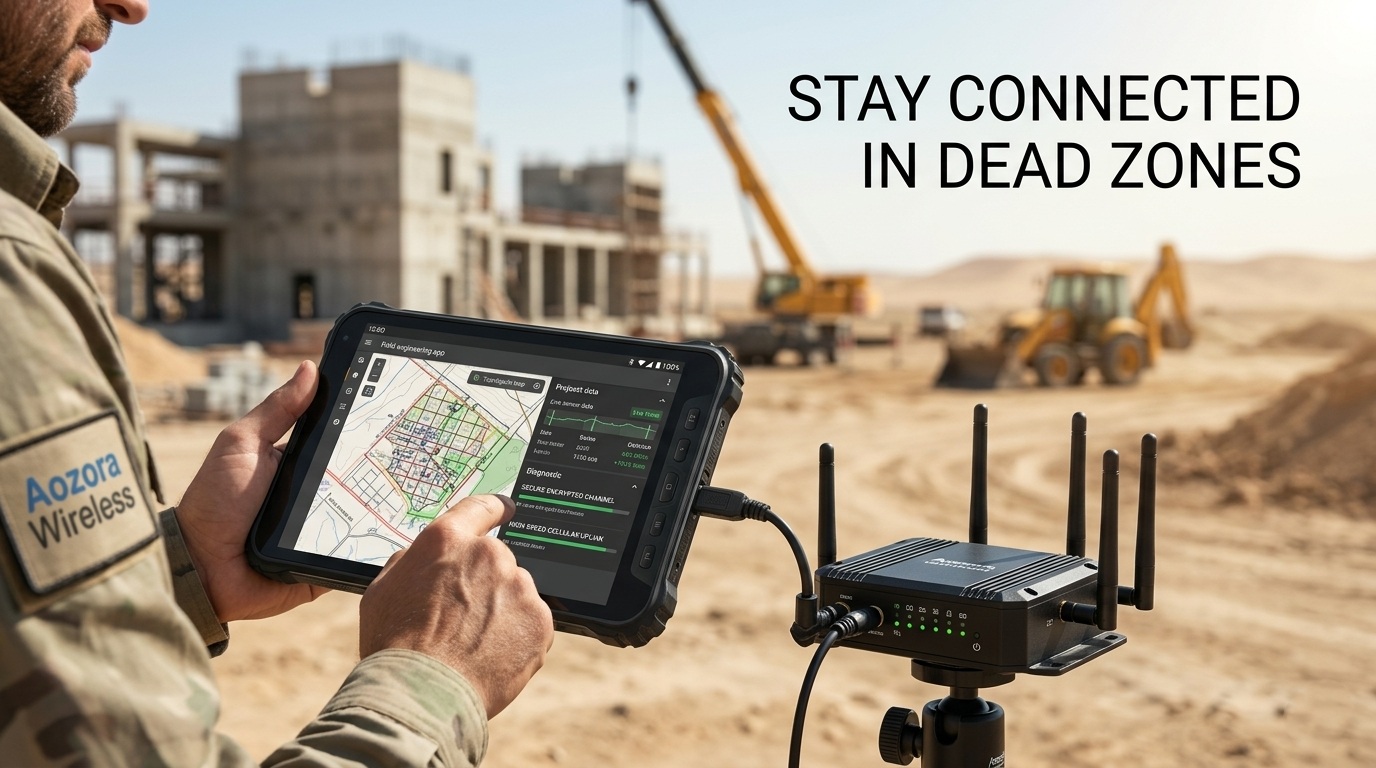
We must evaluate hard costs carefully. You pay an initial purchase price. You buy necessary peripherals. You invest in extended warranties. Consumer devices look much cheaper initially. However, they require frequent replacement. A standard device might last only one year outdoors. You must buy it three times over a standard enterprise lifecycle. This completely destroys your hardware budget. The upfront savings serve only as an illusion.
Soft costs act as a massive hidden multiplier. Equipment failure drains labor productivity rapidly. Workers cannot complete their tasks without a screen. IT teams waste countless hours diagnosing field errors remotely. They manage severe administrative overhead for RMAs. These soft costs quickly exceed the initial hardware price. Every minute a field worker spends fighting a frozen screen hurts your bottom line.
Let us look at the ROI math. Consider a baseline framework for decision-makers. Consumer tablets often suffer a 15% failure rate annually in harsh conditions. Purpose-built devices experience less than a 2% failure rate. Over a four-year lifecycle, you drastically reduce replacement purchases. You eliminate massive downtime events. This yields a strong net-positive ROI. The industrial option wins easily. It wins despite a noticeably higher initial unit cost.
A rugged tablet represents far more than just a durable screen. It serves as a highly secure, field-integrated data node. These devices exist specifically to protect your operational continuity. Consumer hardware simply collapses under the pressure of extreme temperatures, heavy drops, and constant vibration. Enterprise mobility demands dedicated thermal management, robust ingress protection, and seamless MDM integration. Your field crews deserve reliable tools. Hardware failures should never dictate your daily productivity.
IT and operations leaders must take actionable next steps. Map out your exact environmental hazards first. Define your software and connectivity requirements clearly. Once you understand your operational needs, request a pilot program. Secure a demo unit and test it directly in actual field conditions. A scalable rollout should only happen after the hardware proves itself in your unique environment.
A: The main difference lies in water protection. An IP65 rating means the device survives low-pressure water jets and heavy dust. It handles rain well. An IP67 rating means the device is fully sealed. It survives temporary submersion in water up to one meter deep. You need IP67 for maritime use or heavy chemical washdowns.
A: No. Heavy-duty cases fail to address internal vulnerabilities. They do not seal charging ports from dust or moisture. More importantly, they trap heat. Standard tablets lack internal thermal management. When encased, they overheat quickly in summer weather. This degrades the consumer battery and causes severe processor throttling.
A: These devices typically offer 3 to 5 years of active field use. Manufacturers back them with extended enterprise warranties. They also guarantee component and accessory availability for the entire duration. This starkly contrasts with the brief 1-to-2-year replacement cycle of standard consumer devices.
A: Yes. Professional-grade devices utilize robust internal cellular modems. They feature dedicated pass-through antennas and dual-SIM capabilities. This hardware maintains much stronger network connections in remote or interference-heavy locations. Consumer devices typically drop signals much faster under the same geographic conditions.


