

Views: 243 Author: Site Editor Publish Time: 2026-07-12 Origin: Site


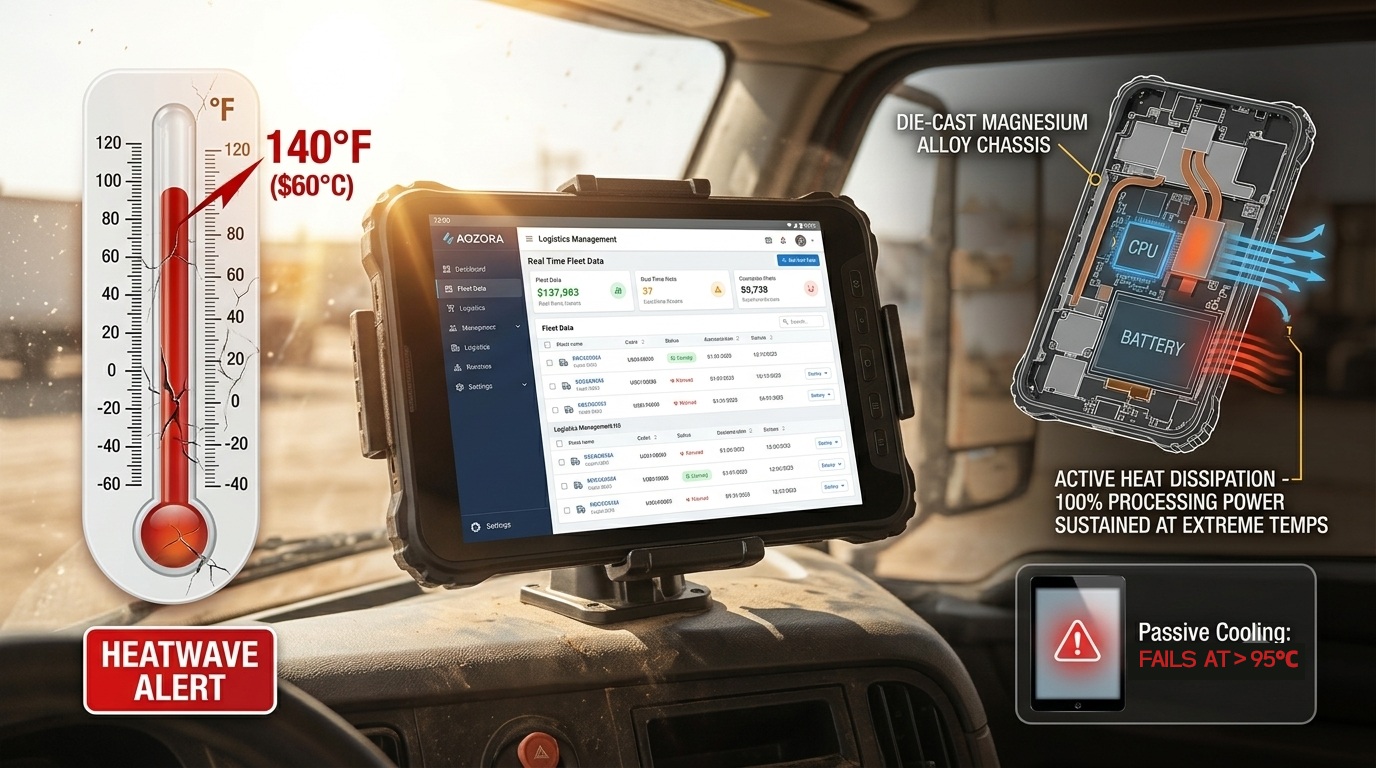
You've got a massive fleet of trucks or a network of field service technicians. They need to sync real-time telematics, process critical order data, and update job tickets from remote locations. You buy a stack of generic "Android rugged tablets" with impressive specs and 4G capability. Then the data dropout reports start rolling in.
You call your carrier, AT&T or Verizon. They ask for the device IMEI. After a painful wait, the tech tells you, "That device is not authorized for our enterprise network."
This isn't just an IT headache. If you are operating under specific regulatory mandates, like food safety (FSMA 204), pharmaceuticals (DSCSA), or general DoD supply chain traceability, this network rejection is a data compliance catastrophe. If the tablet can't maintain a secure, authorized connection, that critical data is lost or delayed. Your audit trail vanishes.
A: "AT&T Certified" means the specific industrial hardware, including the modem, firmware, and security protocols, has passed extensive, multi-layer testing by AT&T to ensure it functions perfectly on their network without causing dropouts, security holes, or network interference, which is critical for maintaining real-time data compliance.
Here is the thing about non-certified devices: they are built for generic global bands, not optimized North American infrastructure. When your tablet roams across network cells or moves into a region with legacy bands, it can't negotiate a seamless handoff. For you, this means apps freeze, data uploads stall, and critical state-syncing fails.
Now, imagine your compliance audit. The inspector asks for temperature logs from Truck 14 for last Tuesday. You look at your SaaS dashboard, and there's a massive 4-hour gap in the data. Why? Because the driver was in a region with poor band negotiation, and the tablet silently went offline, unable to sync its data buffer.
You can't argue with an empty log. Your compliance rating tanks.
The K8 Active industrial rugged tablet eliminates this risk. It is engineered with carrier compatibility, ensuring it is officially recognized on major enterprise networks. When we say it has carrier certifications (like AT&T), we mean it has been validated to maintain stable connections. Data flows, compliance is met, and audits pass.
A: Avoid data non-compliance by deploying a certified Verizon rugged tablet like the K8 Active, which is officially recognized on major networks (e.g., AT&T Certified) and engineered to maintain continuous, authorized connections to North American cellular infrastructure, ensuring no data audit gaps.
A compliance strategy is only as strong as its weakest hardware link. That USB-C port on a consumer-grade tablet is not built for vehicle vibration. After 6 months of being docked and undocked in a truck cab, it will fail. Your data stops syncing, and you are right back to that data dropout nightmare.
We didn't design the K8 Active to be "consumer plus." It uses a proprietary 14-pin Pogo Pin interface. This rear-mounted, physical docking connection provides power and high-speed data transmission that is vibration-proof, dirt-resistant, and mechanical-wear resistant. The connection between the tablet and your vehicle systems is hardwired and continuous, ensuring real-time telematics sync. Compliance data isn't dependent on a weak consumer-grade port. It flows constantly.
The era of trusting white-label hardware for mission-critical industrial data is over. Regulatory pressure (like FSMA 204 or pharma supply chain compliance) means you must have confidence in every point of data ingress. The K8 Active industrial Verizon tablet and AT&T certified Android rugged tablet removes the variables of network rejection, firmware incompatibility, and physical port failure.
Your data compliance starts with verified, certified hardware. We specialize in enterprise-certified rugged tablet deployments. We don't talk in conceptual terms; we deal in carrier approvals, MIL-STD testing, and data security.
Request a Quote / Talk to our Engineering Team for an Audit-Proof Deployment


