

Views: 421 Author: Site Editor Publish Time: 2026-07-15 Origin: Site


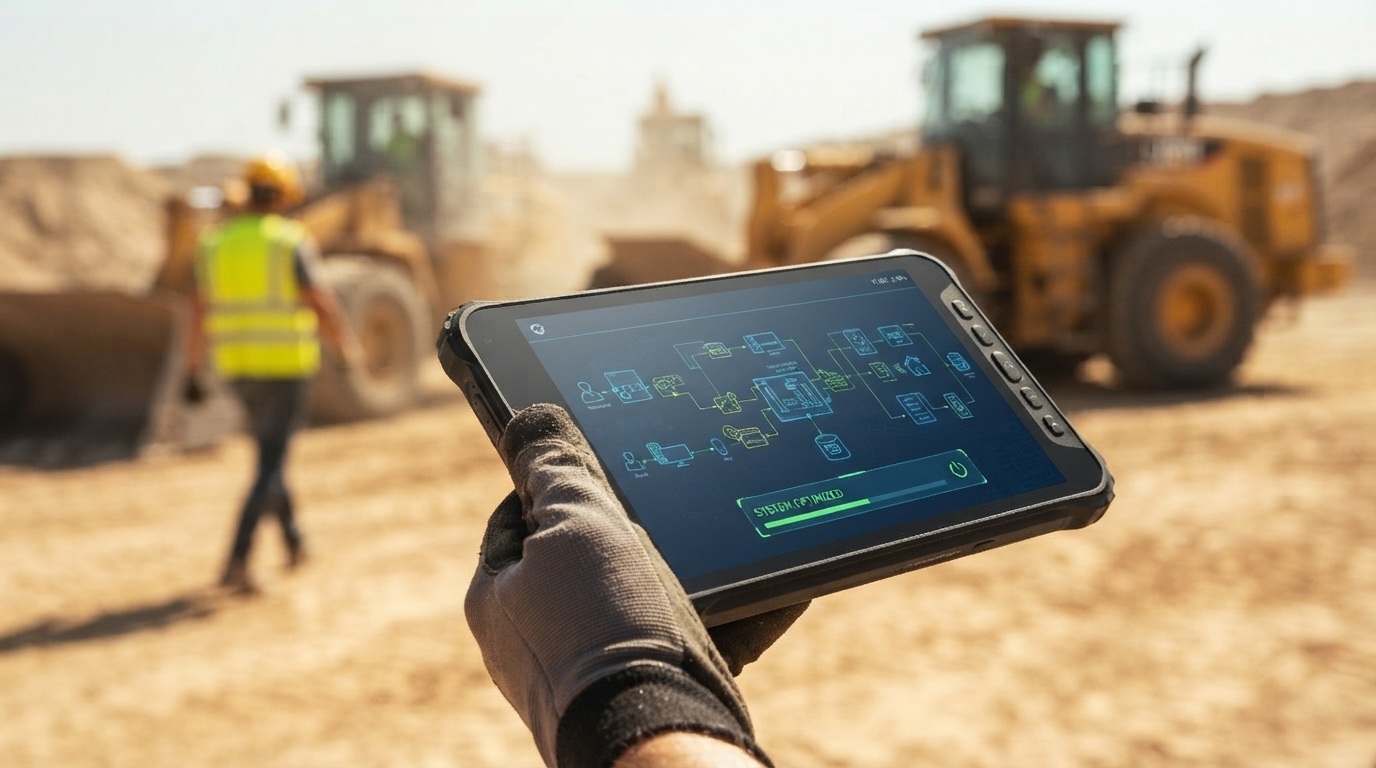
The thermometer is pushing 100°F. Across the country, logistics hubs, job sites, and manufacturing floors are under heat advisories.
If you're a field manager, you know the drill. Your team isn't just fighting the weather—they're fighting their gear. You've probably seen it: a technician tries to sync an inventory update, but the screen turns black. Or worse, the tablet slows to a crawl because the processor is desperately trying to prevent a meltdown.
These aren't just minor tech glitches. When your field data stops flowing, your entire operation hits a "silent breakpoint."
Most off-the-shelf tablets are designed for the living room, not the job site.
They use ultra-thin enclosures with zero room for heat dissipation. When ambient temperatures spike, the device's internal chemistry changes. The CPU—sensing a thermal crisis—hits the brakes. It throttles performance to save the motherboard from frying.
The result? Your field apps lag, barcode scans time out, and your team is left standing in the sun, waiting for a device to "cool down." In industries like power grid inspection or chemical processing, that delay is a massive safety and efficiency liability.
An industrial rugged tablet is built with a different philosophy.
We don't rely on internal fans. Fans are a liability; they just suck in dust, metal shavings, and humidity. Instead, we use a passive thermal management architecture.
Aozora tablets utilize a magnesium-alloy internal frame that acts as a heat sink. We integrate vacuum-sealed heat pipes that draw thermal energy away from the CPU and push it to the external chassis. That metal casing? It's designed to radiate heat outward, keeping the internal logic board within its operating sweet spot even when the sun is beating down on the screen.
Data is the only thing that matters when you're choosing hardware.
Our units are certified to MIL-STD-810H standards. During high-temperature testing, we don't just check if the device turns on. We run continuous stress loads in 140°F (60°C) environments to ensure the data throughput remains steady.
Here's a story from one of our clients in the Arizona solar sector: Their crew previously used consumer-grade tablets that would trigger "Device Overheating" warnings after just 30 minutes in direct sunlight. They'd have to head back to the truck to cool the units down. After switching to Aozora, they completed full, 8-hour shifts without a single thermal-related shutdown. That's not just a hardware upgrade; that's an entire shift's worth of recovered productivity.
Heat doesn't just affect hardware; it affects signal stability.
A standard Wi-Fi-only tablet or a consumer phone tethered to a hot-running mobile hotspot will often drop packets when the radio chips get too hot. Our industrial Verizon tablets feature high-gain, integrated LTE antenna modules. We've tuned these modules specifically to maintain signal sensitivity even as the chassis temperature rises. You get a persistent connection, whether you're in a dense urban industrial park or a remote worksite.
Every minute your crew spends troubleshooting a locked-up tablet is a minute you aren't billing.
If you're still deploying consumer devices for professional field work, you're paying for it in hidden downtime. Stop treating fragile hardware like a tool.
We've put together a technical breakdown on how to select hardware that actually survives the summer.
[Click here to download the "Hardened Hardware Deployment Whitepaper"]
See how your current setup compares, and figure out how to stop the "silent breakpoints" before the next heat wave hits.
Are you currently seeing a spike in device-related tickets during these extreme heat days, or is your team struggling with signal loss in remote areas?


