

Views: 342 Author: Site Editor Publish Time: 2026-07-11 Origin: Site


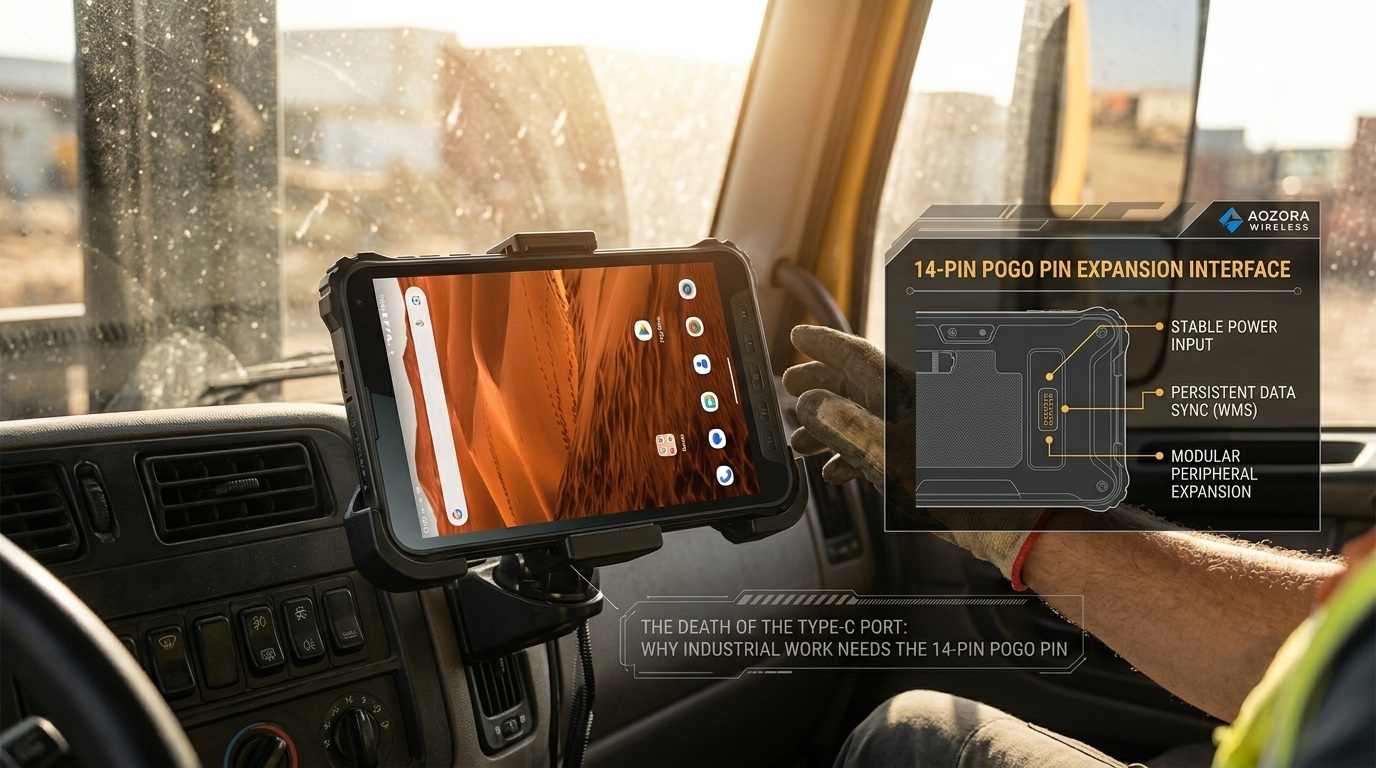
Type-C is great for your phone, your laptop, and your living room. It's an engineering marvel for the consumer world. One cable to charge, sync, and connect everything. But try taking that same port into a 24/7 fulfillment center, mounting it on a diesel-engine forklift, or handing it to a field tech servicing oil rigs in West Texas.
Here's the thing: Type-C is fragile. The tiny center tab inside the port? It bends. The delicate mating connection? It wears out after a few thousand insertion cycles. Add in dust, fine sand, or just the relentless vibration of a heavy-duty truck dashboard, and that port becomes a guaranteed point of failure within six months.
We see it constantly with new clients who tried to cut corners with consumer gear—rugged-ish tablets that are essentially just consumer electronics in a thick rubber boot. They call us after their third repair cycle, complaining about devices that "won't hold a charge." The tablet isn't dead; its charging port is physically wrecked.
For real industrial Verizon tablet operations, Type-C isn't a feature; it's a liability. True rugged tablet design understands that to survive the field, you must eliminate complexity and minimize physical points of wear.
Direct Answer: Type-C ports fail because they are complex mating connections susceptible to damage from dust, dirt, and repetitive stress. This failure increases Total Cost of Ownership (TCO) through frequent repairs, device downtime, and lost field productivity, often costing far more than the initial device savings.
Think the rugged casing will protect the port? Think again. The very act of plugging and unplugging that consumer-grade cable every day creates wear. A driver, wearing gloves and rushing, jams the connector in at an angle. The forklift hits a pothole, jarring the connected charging cable and snapping that tiny internal connector tab.
Let's look at the numbers.
Example Scenario: A Fleet of 200 Vehicle Docks
--------------------------------------------------
Initial Device "Saving" vs. Industrial Spec: -$100/unit
Average Type-C Failure Rate: 35% within 12 months
Cost of Repair per Failure: $180
Lost Driver Productivity (2 hours): $60
Total Cost of Single Failure: $240

200 Units x 35% Failure x $240 = $16,800
Initial "Saving": -200 Units x $100 = -$20,000

Result: You spent an extra $3,200 (TCO) to manage the port failure crisis.
And this isn't accounting for the administrative headache of managing the depot repair process, shipping replacement units, or the database corruption that occurs when a tablet power-cycles during a critical sync. The real cost of a failed port is paralysis.
A: A Pogo Pin is a spring-loaded, wear-free interface that provides a secure physical connection for power and data transmission. It eliminates the delicate mating connections of consumer ports, resisting dust, vibration, and damage from repetitive docking, which prevents physical failure in demanding environments.
This isn't an accessory; it's a fundamental architectural shift. The back of the K8 Active industrial rugged tablet features a precision-engineered 14-Pin Pogo Pin interface. It isn't hidden on the bottom edge where it might be obstructed by a case; it's a dedicated, surface-level connection built into the chassis itself.
Here is the hardcore engineering reality: the Pogo Pin uses multiple spring-loaded contacts. You aren't creating a frictional mating connection; you are establishing a secure, surface-to-surface pressure contact. We've optimized the pin count specifically for industrial applications, supporting not just stable charging but robust, continuous data transmission even under severe mechanical stress.
This is where the design truly excels. When the K8 Active is dropped into its custom, high-impact vehicle cradle, a magnetic array aligns the device, and a spring-loaded retention latch provides a second layer of security. The 14-pin interface is immediately engaged. No fiddling with tiny Type-C cables, no worrying about bad connections. It's hardwired, secure power and high-speed data that is unaffected by engine vibration, chassis rattle, or rough terrain. It just works.
We aren't just sending juice through these pins. Those 14 pins support multiple signal protocols. This allows you to stack modular expansions—RFID readers, specialized barcoding engines, external sensor arrays—without plugging anything into the side. The K8 Active isn't just a mobile computer; it becomes a powerful, integrated edge computing node. We've had warehouse clients build custom hand-held units that use the Pogo interface to maintain persistent data connection while simultaneously running power-hungry RFID readers, eliminating the nightmare of multiple external power packs and cables that snag.
A: Industrial Pogo Pin interfaces, like the 14-pin system on the K8 Active, are designed for specialized high-speed data lines. The contacts use advanced materials and optimized pin count to provide stable, low-impedance connections that maintain persistent data sync—critical for logistics and WMS databases—without suffering the signal degradation or physical wear that plague consumer-grade ports.
The era of trusting white-label hardware for mission-critical industrial data is over. Regulatory pressure (like FSMA 204 or pharma supply chain compliance) means you must have confidence in every point of data ingress. The K8 Active industrial verizon tablet and AT&T certified android rugged tablet removes the variables of network rejection, firmware incompatibility, and physical port failure.
Your data compliance starts with verified, certified hardware. We don’t talk in conceptual terms; we deal in carrier approvals, MIL-STD testing, and data security.
Request a Quote / Contact Our Systems Engineering Team for Sample Evaluation


