

Views: 346 Author: Site Editor Publish Time: 2026-06-05 Origin: Site


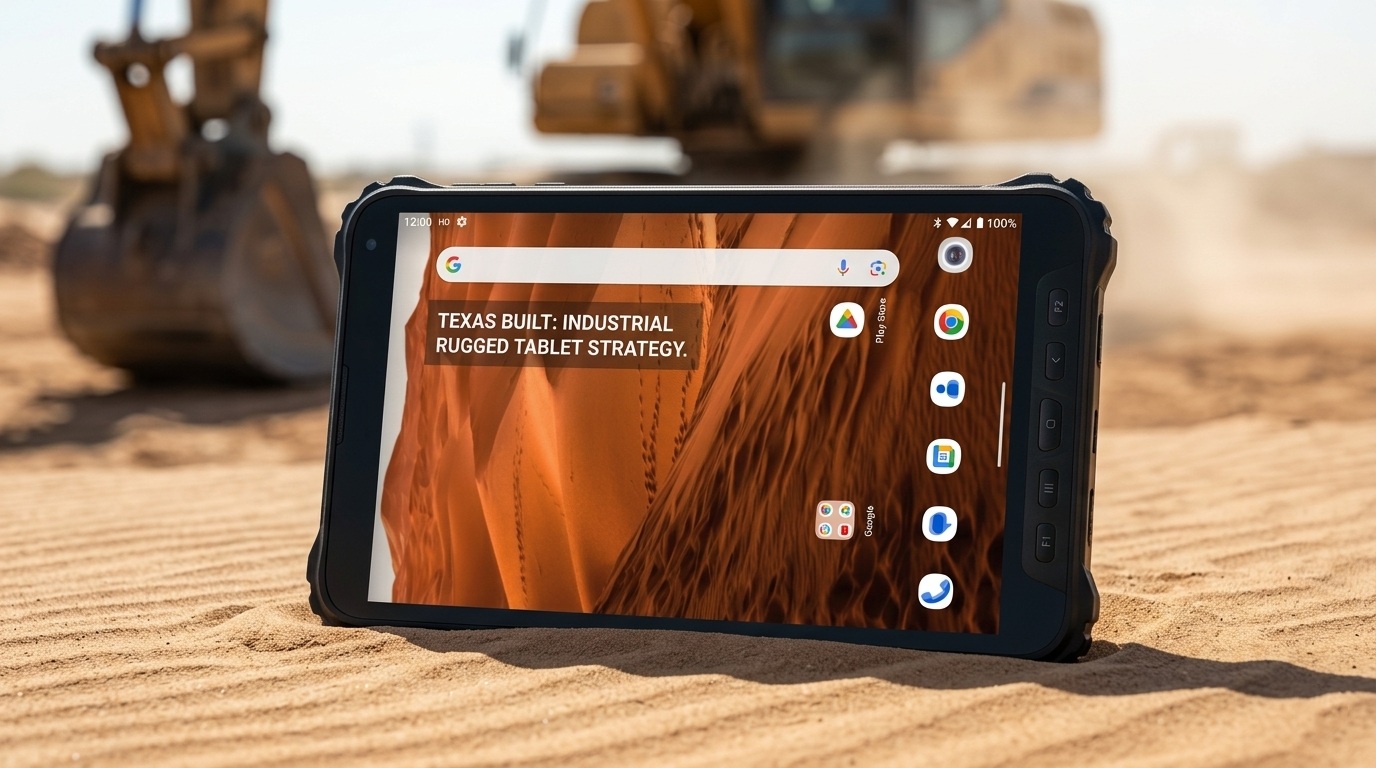
Construction professionals work in demanding environments where extreme dust, continuous vibration, heavy rain, and accidental concrete drops are daily operational challenges. Standard consumer tablets quickly break down or malfunction under these severe jobsite conditions.
A rugged tablet for construction is an industrial-grade mobile computer designed to withstand high-impact drops, harsh weather, and airborne debris while supporting digital field data collection, CAD blueprint viewing, and real-time project management.
Replacing fragile paper blueprints and consumer mobile devices with military-grade construction tablets improves project accuracy, enhances field-to-office communication, and reduces costly equipment replacements.
This guide explores why construction companies need rugged hardware, key site applications, outdoor display readability, and essential durability specifications for modern jobsites.
1. Durability on Construction Sites: Built with MIL-STD-810H vibration resistance and IP68 dust/water protection to survive heavy equipment shaking and rain downpours.
2. Outdoor Visibility and Glove Operation: Features high-brightness displays (800+ nits) for direct sunlight readability and rain/glove-touch capacitive response.
3. Connectivity for Field Teams: High-speed 4G/5G LTE and precise GPS enable real-time geotagged site reports and instant cloud sync with office engineers.
Jobsite Application | Field Workflow | Primary Hardware Requirement |
Site Inspection & Audits | Geotagged photo capturing, safety compliance, and defect logging | High-resolution camera & MIL-STD-810H drop protection |
Digital Blueprint Viewing | Large-scale CAD drawing overlays and BIM model site checks | High-brightness (800+ nits) sunlight-readable screen |
Equipment Maintenance | On-site machinery diagnostics and maintenance sign-off | Glove-touch touchscreen & IP68 waterproof housing |
Safety Management | EHS inspection checklists and instant hazard alerts | 4G/5G LTE cellular for remote site coverage |
Project Time & Tracking | Subcontractor sign-in, daily material tracking, and audit | Long-life battery with hot-swappable replacement |
"Water-resistant" on a consumer phone doesn't mean it's built for a construction site. You need an industrial standard.
The Aozora K8 Active is rated IP68 and IP69K.
IP68 handles complete submersion. If it drops in a muddy puddle after a flash rainstorm, it stays sealed.
IP69K is the heavy hitter. It means the unit can withstand high-pressure, high-temperature water jets.
Why do you care? Because you don't need to "baby" the device. When it gets covered in dust and mud at the end of the day, you can literally wash it off with a hose. No more worrying about port damage or moisture ingress.
Fiddling with a USB-C cable in the field is a recipe for broken ports. Someone tugs the cord, the port gets bent, and the tablet is toast.
The K8 Active uses a 14-pin Pogo Pin interface on the rear. This isn't just an "add-on"—it's a physical dock. You snap the tablet into a vehicle mount or a barcode scanner module, and it's locked. It's a clean connection that won't vibrate loose on a heavy truck and doesn't get clogged with sand. It saves your crew time, and more importantly, it stops the constant cycle of buying new tablets.
A tablet without a signal is just an expensive clipboard. Many consumer devices have weak antennae that struggle with the massive, often remote areas of Texas job sites.
The K8 Active features certified 4G LTE connectivity. It's not just "compatible"—it's fully certified for Verizon, AT&T, and T-Mobile. When your site lead needs to push data back to the office, they have a stable, prioritized connection.
Answer: Construction workers need rugged tablets because standard devices break easily when exposed to jobsite concrete drops, continuous heavy dust, extreme weather, and high vibration from power tools.
Answer: Yes. Enterprise construction tablets feature anti-glare sunlight-readable screens (800+ nits) and rain/glove-touch technology, allowing workers to operate touchscreens accurately without removing safety gloves.
Answer: Essential features include MIL-STD-810H drop protection (1.2m+), an IP68 waterproof/dustproof rating, integrated GPS, 4G/5G LTE connectivity, and a sunlight-readable display.
A: Not with the K8 Active. We use an industrial, sealed design that protects internal components from fine grit. Plus, our 14-pin Pogo Pin system replaces delicate charging ports, allowing you to charge and connect modules without exposing internal pins to the elements.
A: Yes. Consumer tablets are designed for climate-controlled environments and will shut down to protect their batteries once they hit thermal limits. Industrial rugged tablets like the K8 Active use enhanced thermal management to keep performance stable, even when working in
You're losing money every time a device fails. If your crew is spending their time troubleshooting tablets instead of managing the build, you have a hardware problem.
Switch to an industrial rugged tablet that's built for heat, dust, and real-world handling. It's not an expense; it's an operational requirement.
Choosing a Rugged Tablet for Construction Applications
The Aozora K8 Active rugged tablet is designed for demanding field environments, offering MIL-STD durability, IP68 protection, 4G/5G LTE connectivity, and long battery performance for active construction jobsites.


