


Views: 346 Author: Site Editor Publish Time: 2026-07-04 Origin: Site


Deploying mobile devices across enterprise fleets requires seamless network connectivity, zero-touch security provisioning, and uninterrupted remote management. For enterprise IT managers, choosing a device with official Carrier Certification (such as Verizon and AT&T network approvals) combined with Google Mobile Services (GMS) is essential for large-scale Mobile Device Management (MDM).
Carrier certification verifies that an industrial tablet strictly complies with wireless network performance, RF efficiency, and emergency call handling standards. Furthermore, GMS integration allows IT teams to enroll tablets into enterprise MDM solutions (e.g., VMware Workspace ONE, SOTI MobiControl, Knox, or Google Endpoint Management) instantly via zero-touch enrollment. Without proper carrier certification and GMS compliance, remote fleet devices risk frequent network disconnections, blocked SIM cards, and compromised security updates.
To guarantee high-speed data transmission across urban, suburban, and remote industrial environments, an enterprise rugged tablet must support comprehensive LTE and 5G band combinations utilized by major North American carriers.
| Carrier Network | Supported LTE / 5G Bands | Primary Deployment Frequency Usage | Enterprise Network Benefits |
| Verizon Wireless | B2, B4, B5, B13, B48 (CBRS), n77 (5G) | B13 (Low-band long-range coverage); B48 (Private LTE networks) | Exceptional indoor wall penetration, reliable rural coverage, and Private LTE support. |
| AT&T Mobility | B2, B4, B5, B12, B14 (FirstNet), B30, B66, n77 | B12/B14 (Public Safety & Long-range); B2/B4/B66 (Urban high-capacity) | Native compatibility with emergency response and public safety communication infrastructure. |
| T-Mobile US | B2, B4, B12, B66, B71, n41, n71 | B71 / n71 (600MHz Extended Range); n41 (Ultra-Capacity 5G) | Wide-area rural coverage coupled with high-speed 5G mid-band data throughput. |
| Global Unlocked (Roaming) | B1, B3, B7, B8, B20, B28, B38, B40, B41 | International 4G/5G Frequency Allocation | Smooth roaming across cross-border logistics routes (US, Canada, Mexico, Europe). |
A: PTCRB (PCS Type Certification Review Board) and carrier-specific certifications ensure that a mobile device meets rigorous international network safety, radio frequency (RF), and interoperability standards. Uncertified devices can cause network interference, suffer from degraded data transfer rates, or even be automatically blocked by major carriers like Verizon and AT&T. For enterprise fleet operations, PTCRB certification guarantees reliable network attachment, seamless SIM provisioning, and fullVoLTE voice capability.
A: Industrial tablets equipped with multi-mode cellular modems utilize dynamic carrier signal evaluation algorithms. When a field worker moves outside 5G high-speed coverage zones (e.g., entering underground facilities or rural worksites), the modem executes a seamless layer-3 protocol handoff to available 4G LTE bands (such as Low-Band B13 or B12) without dropping active IP connections, VPN sessions, or real-time MDM telemetry data.
Looking for an enterprise-ready rugged tablet capable of driving your mission-critical field operations across North America?
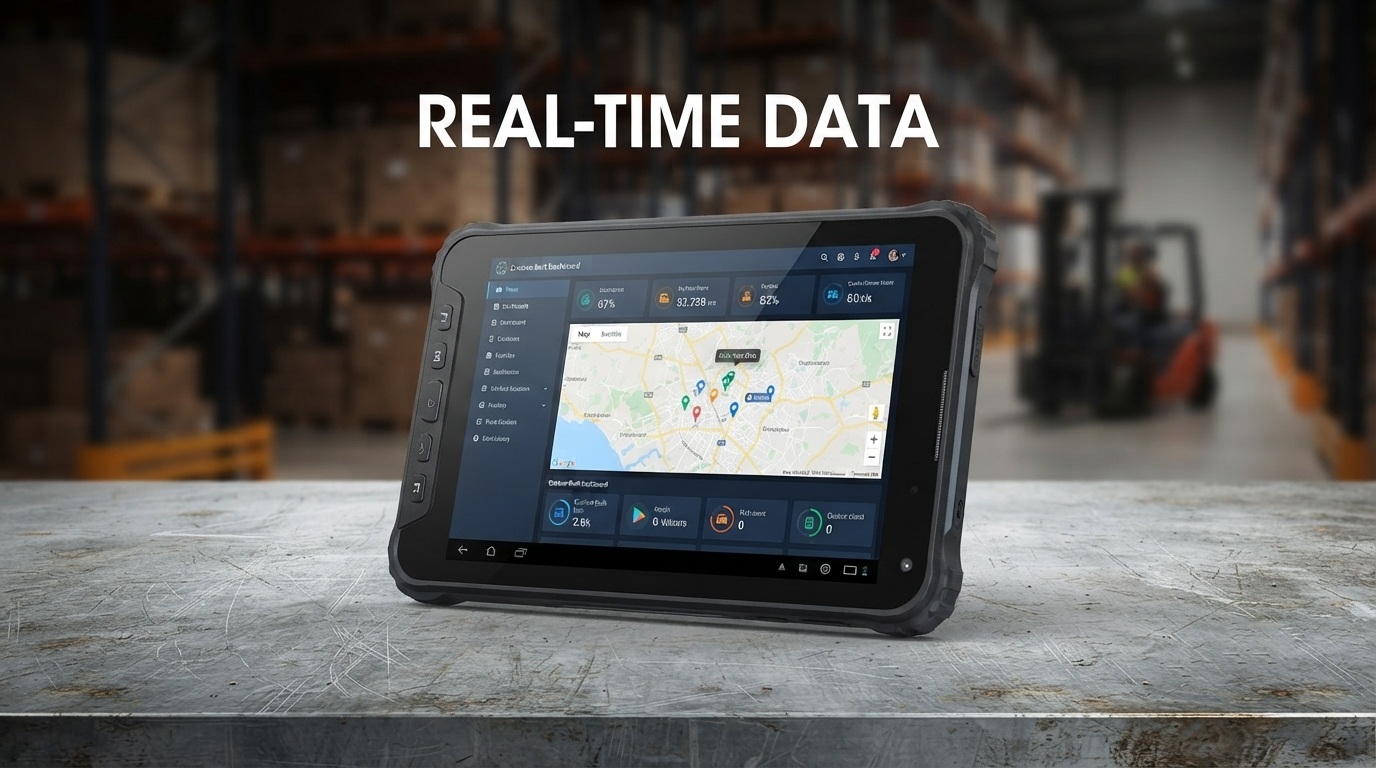
The AOZORA K8 Active is engineered specifically for seamless enterprise wireless connectivity. Operating on Full Android OS with GMS certification, the K8 Active features 4G/5G full cellular network compatibility , providing complete support for Verizon, AT&T, and global network bands. Combined with enterprise MDM enrollment support, IP68/IP69K water resistance, and MIL-STD-810H vibration/drop protection, the Verizon Certified Rugged Tablet K8 Active ensures your mobile workforce remains connected and secure wherever duty calls.
Full Cellular Compatibility: Complete 4G/5G full-netcom connectivity supporting Verizon, AT&T, and T-Mobile.
Full Enterprise Android OS: Powered by pure Android with Google Mobile Services (GMS) for effortless MDM management.
Rugged Military-Grade Protection: Certified MIL-STD-810H drop resilience and IP68/IP69K high-pressure waterproof rating.
Contact Us Today for Product Pricing, Testing Samples & Custom OEM/ODM Solutions


