


Views: 346 Author: Site Editor Publish Time: 2026-07-05 Origin: Site


Industrial rugged tablets are designed for businesses that require reliable mobile computing solutions in challenging environments where standard consumer tablets cannot provide the durability and stability required for daily operations. Unlike consumer tablets designed primarily for personal use, an industrial rugged tablet is engineered to perform in demanding workplaces such as manufacturing facilities, warehouses, construction sites, logistics operations, field service environments, and outdoor industrial applications. These environments often expose electronic devices to harsh conditions, including heavy dust, water, vibration, accidental drops, extreme temperatures, and continuous daily use.
A standard tablet may experience performance issues or hardware failures under these conditions, resulting in workflow interruptions and increased operational costs.
An industrial rugged tablet solves these challenges by combining powerful computing capabilities with enhanced physical protection. These devices typically feature reinforced housings, shock-resistant designs, sealed ports, industrial-grade components, high-capacity batteries, sunlight-readable displays, and reliable wireless connectivity options.
For businesses, choosing the right rugged industrial tablet requires more than comparing processor performance or screen size. The device must match the actual working environment, operational requirements, and long-term deployment goals. The five most important factors companies should consider when selecting an industrial rugged tablet include durability, connectivity, battery life, display visibility, and certifications. Durability determines whether the tablet can withstand drops, vibration, dust, and harsh environmental conditions. Connectivity ensures workers can maintain access to critical business systems through technologies such as 4G LTE, 5G, GPS, and enterprise wireless networks. Battery performance directly impacts productivity by reducing charging interruptions during long shifts. Display quality, especially sunlight readability, allows workers to clearly view information in outdoor environments. Certifications such as MIL-STD-810H and IP68/IP69K demonstrate that the device has been tested for demanding industrial conditions. Selecting the right industrial rugged tablet is not simply about purchasing a durable computer. It is about investing in a reliable mobile platform that improves productivity, reduces downtime, and supports efficient business operations in real-world industrial environments.
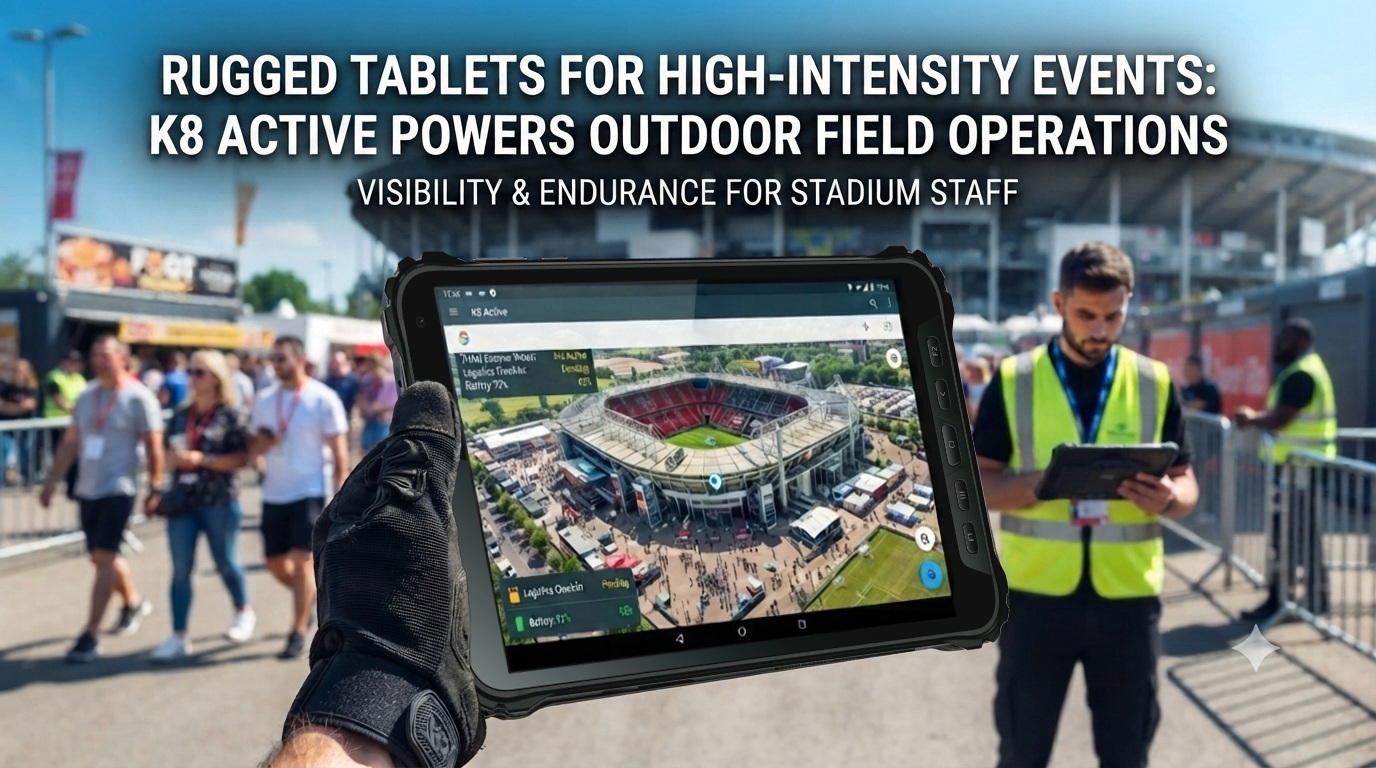
For enterprises seeking field-proven hardware, industrial devices such as the Aozora K8 Active rugged tabletdeliver enterprise-grade durability, integrated scanning, and certified wireless connectivity for demanding environments.
An industrial rugged tablet is a durable mobile computing device designed specifically for industrial environments where reliability, protection, and long-term performance are critical. Unlike standard consumer tablets, industrial rugged tablets are built to withstand challenging working conditions such as dust, water exposure, vibration, accidental drops, extreme temperatures, and continuous daily operation. These devices are commonly deployed in manufacturing facilities, warehouses, construction sites, transportation operations, utilities, and field service environments. An industrial rugged tablet combines the mobility of a traditional tablet with the durability and reliability required for professional applications. It allows workers to access business software, collect data, communicate with teams, manage workflows, and operate digital systems directly from the job site. Depending on the application and deployment environment, industrial mobile computers are often described using several related terms, including industrial tablets, enterprise tablets, and field tablets.
The term "Industrial Rugged Tablet" encompasses three core engineering pillars:
- Industrial Grade: Built with commercial-grade components that support long product lifecycles (3 to 5+ years), extended operating temperature ranges (-20°C to 60°C), and legacy I/O ports(RS232, Ethernet, barcode engines).
- Ruggedized Construction: Certified under stringent military testing standards (MIL-STD-810H) to resist repeated 1.2m–1.5m drops onto concrete, continuous vehicle vibration, and mechanical shock.
- Mobile Computing: Runs full-featured enterprise operating systems (Android Enterprise or Windows) to execute complex ERP, MES, WMS, and CAD applications directly in the field.
An industrial tablet is a ruggedized mobile computer designed for use in industrial and commercial environments. These devices are commonly used in manufacturing, logistics, warehouses, and production facilities where equipment must operate reliably under demanding conditions. Industrial tablets typically focus on durability, connectivity, and compatibility with business applications. Features such as barcode scanning, GPS positioning, wireless communication, and enterprise software support make them valuable tools for improving operational efficiency.
An enterprise tablet is designed for business organizations that require secure, reliable, and manageable mobile devices across large teams or multiple locations. Enterprise tablets are commonly used for fleet management, field operations, inspections, inventory management, and workflow automation. Compared with consumer tablets, enterprise devices often provide longer product availability, stronger security features, centralized device management, and better integration with business systems.
A field tablet is designed for professionals who work outside traditional office environments, including construction workers, utility technicians, transportation teams, and emergency responders. Field tablets prioritize mobility, outdoor visibility, and reliable operation in changing environments. Features such as sunlight-readable displays, high-capacity batteries, GPS, and cellular connectivity allow workers to access critical information while performing tasks in remote or outdoor locations.
While these terms are sometimes used interchangeably, they focus on different usage scenarios. An industrial rugged tablet combines the advantages of all three categories by providing the durability required for industrial environments, the management capabilities needed by enterprises, and the mobility required for field operations.
Consumer tablets are designed for everyday personal use, including entertainment, web browsing, communication, and general office tasks. While these devices provide excellent performance in controlled environments, they are usually not designed for the demanding conditions found in industrial workplaces. Industrial rugged tablets are specifically engineered for professional environments where durability, reliability, and long-term operation are essential. Manufacturing facilities, construction sites, warehouses, and field service operations often expose devices to dust, moisture, vibration, accidental drops, and extreme temperatures. Using consumer tablets in industrial environments may lead to increased equipment failures, unexpected downtime, and higher replacement costs. A device that works well in an office may not provide the protection or reliability required for daily industrial operations. The key difference between consumer tablets and industrial rugged tablets is not only hardware performance, but also the ability to maintain stable operation under challenging conditions.
Feature | Consumer Tablet | Industrial Rugged Tablet |
Primary Usage | Personal and office tasks | Industrial and field operations |
Drop Protection | Limited protection for accidental drops | Designed for drops and vibration resistance |
Dust and Water Protection | Basic or limited resistance | |
Environmental Resistance | Normal indoor environments | Extreme temperatures and harsh workplaces |
Connectivity | Mainly Wi-Fi focused | LTE, 5G, GPS and enterprise connectivity |
Product Lifecycle | Short consumer replacement cycles | Long-term enterprise deployment support |
The biggest difference between consumer tablets and industrial rugged tablets is durability. Rugged tablets are built with reinforced materials, shock-resistant designs, and protective sealing to withstand accidental drops, vibration, dust, and moisture exposure. For industrial environments, protection standards such as MIL-STD-810H and IP ratings provide measurable indicators of device reliability.
Consumer tablets typically operate within comfortable indoor conditions. Industrial rugged tablets are designed for more challenging environments, including factories, outdoor worksites, warehouses, and transportation operations. These devices can continue operating in conditions involving temperature changes, dust exposure, vibration, and frequent movement.
Industrial workers often require access to real-time information outside traditional office networks. Unlike many consumer tablets that rely mainly on Wi-Fi, industrial rugged tablets commonly support cellular connectivity options such as 4G LTE, 5G, GPS, and enterprise wireless solutions. Reliable connectivity allows field workers to communicate, collect data, and access business applications from almost any location.
Industrial operations often require devices to work through long shifts without frequent charging. Rugged tablets typically include larger battery capacities and power management features designed for extended field use. This helps reduce interruptions and improves workforce productivity. Operating multi-shift workflows? The Aozora K8 Active features high-capacity battery options and heavy-duty IP68 housing designed for continuous operation.
Although industrial rugged tablets may require a higher initial investment than consumer devices, they can provide better long-term value through improved reliability, reduced downtime, and longer operational lifecycles. For businesses managing large teams or critical workflows, choosing the right industrial tablet can significantly reduce the total cost of ownership.
Key Selection Factor | Engineering Specification | Why It Matters for Enterprise |
Drop Durability | MIL-STD-810H (1.2m – 1.5m drop test) | Prevents screen cracking and internal component failure |
Water/Dust Protection | IP68 / IP69K Ingress Rating | Allows operation in heavy rain, dust storms, and washdown sites |
Outdoor Display | 600+ nits brightness & anti-glare glass | Ensures clear screen readability in direct sunlight |
Barcode Workflows | Integrated optical 1D/2D scan engine | Enables rapid item picking and logistics tracking |
Power Architecture | All-day capacity + hot-swap support | Prevents operational interruptions during shift handovers |
MIL-STD-810H is one of the most important certifications for industrial rugged tablets. This standard evaluates whether a device can withstand demanding environmental conditions including drops, vibration, shock, temperature changes, and other operational challenges.
For businesses working in manufacturing, construction, transportation, and field service environments, MIL-STD-810H certification provides confidence that the tablet has been tested for durability beyond normal consumer devices.
When selecting an industrial rugged tablet, companies should consider whether the device meets military-grade durability requirements based on their actual working conditions.
Protection against dust and water is another critical factor when choosing an industrial rugged tablet. IP ratings indicate the level of protection provided by the device enclosure.
An IP68 rugged tablet is designed to resist dust penetration and water exposure under specified testing conditions. IP69K protection provides additional resistance against high-pressure and high-temperature water cleaning environments.
For industries such as manufacturing, logistics, and outdoor operations, strong IP protection helps maintain reliable performance when devices are exposed to moisture, dust, and harsh environments.
Reliable connectivity is essential for modern industrial operations. Unlike consumer tablets that are often used mainly with Wi-Fi networks, industrial rugged tablets are frequently deployed in locations where workers need continuous access to business systems.
Important connectivity features include 4G LTE, 5G support, GPS positioning, Bluetooth, and enterprise wireless connectivity.
For field workers, reliable cellular connectivity allows real-time communication, data collection, navigation, and access to cloud-based applications from remote locations.
Battery performance directly affects productivity in industrial environments. Workers in warehouses, construction sites, and field service operations often require devices that can operate through extended shifts.
Industrial rugged tablets typically include higher-capacity batteries and optimized power management features to reduce charging interruptions.
A reliable battery solution helps businesses improve workflow efficiency and maintain continuous operations throughout the workday.
Display quality is especially important for workers operating outdoors or in bright environments.
An industrial rugged tablet should provide clear visibility under sunlight, durable touchscreen performance, and reliable operation when used with gloves or in demanding conditions.
Sunlight-readable displays allow field workers to access important information, applications, and digital workflows without visibility issues.
Manufacturing environments require reliable mobile computing devices that can operate in areas with dust, vibration, temperature changes, and continuous daily use.
Industrial rugged tablets help manufacturers improve production efficiency by providing workers with access to digital workflows, equipment information, inventory systems, and real-time operational data.
Compared with standard consumer tablets, industrial rugged tablets are designed to withstand demanding factory conditions while maintaining stable performance during long-term deployment.
Common manufacturing applications include:
• Production line monitoring
• Equipment maintenance
• Quality inspections
• Inventory management
• Digital work instructions
For manufacturing companies, selecting an industrial rugged tablet with strong protection ratings, reliable connectivity, and enterprise-level durability helps reduce downtime and improve operational efficiency.
Warehouses and logistics operations require mobile devices that support fast data collection, inventory management, and communication between workers.
Industrial rugged tablets are commonly used in warehouse environments because they can handle daily drops, dust exposure, extended working hours, and frequent movement.
Typical warehouse applications include:
• Inventory tracking
• Barcode scanning
• Order management
• Warehouse management systems
• Shipping and receiving operations
A reliable rugged tablet allows warehouse employees to access information instantly and improve accuracy throughout logistics processes.
Construction sites present some of the most challenging environments for mobile devices. Workers may experience dust, rain, accidental drops, vibration, and outdoor sunlight exposure.
Industrial rugged tablets provide construction teams with durable computing solutions for accessing project information, managing documents, communicating with teams, and collecting field data.
Common construction applications include:
• Project management
• Site inspections
• Digital drawings and plans
• Equipment monitoring
• Field reporting
For outdoor construction operations, features such as MIL-STD-810H durability, IP protection, long battery life, and sunlight-readable displays are important considerations.
Field service technicians often work in remote locations where reliable mobile access is essential.
Industrial rugged tablets enable technicians to view service documentation, update work orders, communicate with teams, and complete digital reports directly from the job site.
Typical field service applications include:
• Equipment maintenance
• Repair services
• Inspection reports
• Customer service operations
• Remote diagnostics
A rugged tablet designed for field service helps businesses improve response times and provide technicians with reliable tools in challenging environments.
The first step when choosing an industrial rugged tablet is understanding the environment where the device will be used.
Different industries have different requirements. A tablet used inside a factory may require protection against dust, vibration, and continuous operation, while outdoor workers may need stronger protection against water, drops, and temperature changes.
Before selecting a device, businesses should evaluate:
• Indoor or outdoor usage
• Exposure to dust and moisture
• Temperature conditions
• Frequency of drops or impacts
• Working hours and daily usage intensity
Understanding the working environment helps companies select a rugged tablet with the appropriate protection level instead of paying for unnecessary features.
Durability certifications are important indicators when evaluating industrial rugged tablets.
Businesses should review protection standards such as MIL-STD-810H and IP ratings to determine whether a device can operate reliably in demanding environments.
MIL-STD-810H evaluates resistance against conditions such as shock, vibration, and temperature changes. IP ratings define protection against dust and water exposure.
Choosing a tablet with suitable certifications helps reduce equipment failures and improves long-term reliability.
Connectivity is a critical consideration for industrial rugged tablets used in modern business operations.
Companies should evaluate whether they need: Wi-Fi, 4G LTE, 5G, GPS, Bluetooth.
For field service, transportation, and outdoor applications, cellular connectivity allows workers to access business systems even without reliable Wi-Fi coverage.
Battery life directly impacts productivity in industrial environments.
When selecting an industrial rugged tablet, businesses should consider: Battery capacity, Operating time, Replaceable battery options, Charging solutions.
Outdoor workers need displays that remain readable under sunlight and support reliable touch operation in different conditions.
Important display considerations include: Screen brightness, Sunlight readability, Touch sensitivity, Glove operation support, Screen durability.
Businesses should evaluate Operating system requirements, Enterprise device management, Security features, Application compatibility, Long-term software support.
Android rugged tablets are commonly used in enterprise environments because they provide flexibility, compatibility, and easier deployment.
Businesses should consider available accessories such as Vehicle mounts, Docking stations, Protective cases, Barcode scanners, Charging solutions.
Long-term availability, warranty support, and product lifecycle planning are also important factors for enterprise deployments.
Requirement | Questions to Ask |
Environment | Where will the tablet be used? |
Protection | Does it require MIL-STD-810H or IP protection? |
Connectivity | Is LTE/5G required? |
Battery | How many hours of operation are needed? |
Display | Will it be used outdoors? |
Software | What applications are required? |
Accessories | Are mounts or scanners needed? |
Selecting the right industrial rugged tablet requires balancing durability, performance, connectivity, and long-term reliability. Based on these requirements, the Aozora K8 Active is designed for businesses that need dependable mobile computing in demanding environments.
Built for industrial applications, the K8 Active combines rugged protection, enterprise connectivity options, long battery life, and outdoor usability to support industries such as manufacturing, warehouse operations, construction, and field service.
Unlike standard consumer tablets, the Aozora K8 Active is engineered for professional deployment where device reliability and operational efficiency are critical.
Industrial workers often operate in environments where traditional tablets may fail due to drops, dust, moisture, vibration, or extended working hours.
The Aozora K8 Active is designed to support these challenging conditions with rugged construction and features that match industrial deployment requirements.
Typical applications include:
- Manufacturing operations
- Warehouse management
- Construction field work
- Transportation and logistics
- Field service operations
Its rugged design helps businesses reduce device replacement costs and maintain reliable workflows in demanding environments.
Feature | Specification |
Operating System | Android |
Protection | Rugged industrial design |
Durability | MIL-STD-810H support |
Water/Dust Protection | IP-rated protection |
Connectivity | Wi-Fi / LTE options |
Battery | High-capacity battery |
Display | Outdoor readable touchscreen |
Applications | Manufacturing, warehouse, field service |
Businesses selecting industrial rugged tablets usually focus on reliability, deployment flexibility, and total cost of ownership.
The Aozora K8 Active provides advantages including:
1. Rugged durability for challenging environments
2. Reliable connectivity for mobile operations
3. Long battery performance for extended shifts
4. Compatibility with enterprise workflows
5. Flexible deployment across multiple industries
For organizations requiring a dependable industrial Android tablet, the K8 Active provides a balance between protection, performance, and practical business usability.
Need a reliable rugged tablet for manufacturing, warehouse, construction, or field service applications? Learn more about the Aozora K8 Active and discover how it can support your industrial mobile computing needs. Learn More.
Answer: An industrial rugged tablet is a mobile computing device designed for demanding business environments where standard consumer tablets may not provide enough durability or reliability. These tablets are built with reinforced protection features to support industries such as manufacturing, warehouse operations, construction, transportation, and field service. Compared with regular tablets, industrial rugged tablets are designed to operate in environments with dust, vibration, moisture, temperature changes, and frequent daily use.
Answer: The main difference between a rugged tablet and a regular tablet is durability and environmental protection. Rugged tablets typically include stronger housing, improved resistance against drops and vibration, better protection against dust and water, and features designed for professional environments. Regular tablets are mainly designed for consumer use, while rugged tablets are built for long-term deployment in industrial and field applications.
Answer: Important certifications for industrial rugged tablets include MIL-STD-810H and IP protection ratings. MIL-STD-810H evaluates durability against conditions such as shock, vibration, and temperature changes. IP ratings measure protection against dust and water exposure. The required certification level depends on the working environment and application requirements.
Answer: Yes. Many industrial rugged tablets are designed for outdoor applications such as construction sites, transportation operations, and field service work. Outdoor deployment usually requires features including sunlight-readable displays, durable protection, reliable connectivity, and long battery life. Choosing the right rugged tablet depends on the environmental conditions and workflow requirements.
Answer: Yes. Android rugged tablets are widely used in business environments because they provide flexibility, application compatibility, and easier deployment across many industries. Businesses commonly use Android rugged tablets for inventory management, field service applications, manufacturing workflows, and mobile data collection.
Answer: Battery life depends on the tablet model, usage conditions, applications, and connectivity requirements. Industrial rugged tablets are typically designed with higher-capacity batteries and optimized power management features to support extended work shifts. Businesses should evaluate battery requirements based on daily operating hours and workplace conditions.
Answer: Industrial rugged tablets are used across many industries including manufacturing, warehouse and logistics, construction, transportation, and field service. Major industries utilizing rugged tablets include manufacturing (MES tracking), warehousing (inventory & barcode scanning), construction (site CAD viewing), field service (utilities inspection), logistics, and transportation fleet management. They help workers access digital information, collect data, manage workflows, and improve operational efficiency in demanding environments.
Answer: Choosing the right industrial rugged tablet requires evaluating several factors including working environment, durability certifications, connectivity options, battery requirements, display performance, software compatibility, and available accessories. Businesses should select a device that matches their operational needs rather than only comparing basic hardware specifications.
Answer: Yes. While rugged tablets have a higher initial hardware cost than standard consumer devices,
they deliver a significantly lower Total Cost of Ownership (TCO) by reducing device breakage,
eliminating worker downtime, and providing 3 to 5-year product lifecycles.
Choosing the right industrial rugged tablet requires balancing drop durability, ingress sealing, battery architecture, and wireless compatibility.
The Aozora K8 Active Rugged Tablet is engineered specifically for warehouse, manufacturing, and field service professionals who demand uncompromised reliability. Equipped with IP68/IP69K sealing, MIL-STD-810H drop protection, high-nit outdoor visibility, and long-lasting battery power, the K8 Active ensures your mobile workforce stays connected anywhere.
Explore Aozora K8 Active Specifications & Request a Quote


